Creating a Church Culture that Engages the Unchurched
by Brad Bailey
[The following is adapted and expanded from a message at the 2026 Vineyard SoCal Regional Conference]
I want to encourage us to create church cultures that are able to engage the unchurched. This is not a focus I am sharing because of any personal grand success or even gifting… but rather because I believe that this challenge is both vital to our future…and often the most easily avoided.
My experience is that welcoming the unchurched is one of those issues that are easily embraced in principle…but often difficult to actually practice.
I find that nearly every pastor I know finds nothing more satisfying than seeing a life that was lost… discover that they can be found in Christ. At the same time, I find that most churches gather in ways that don’t seem to intentionally engage the growing majority of unchurched culture around them.
Some may presume that a church community’s primary gathering is naturally supposed to be for the churched. However, members are often encouraged to invite their unchurched friends and family because the reality is that those primary gatherings are actually the front door for the unchurched to come seeking.
Some may look around and see only those who already profess a commitment to Christ, so they may assume that they only need to consider the unchurched if they were to actually show up. However, the truth is that we should create what we want…not what we have.
A challenge that most pastors face is that while we value conversions… we feel the expediency of attendance itself. As such, our gatherings are more defined by competing with the expectations of a “Christian culture” that has developed it’s own sense of what is comfortable… and inspiring… and successful.
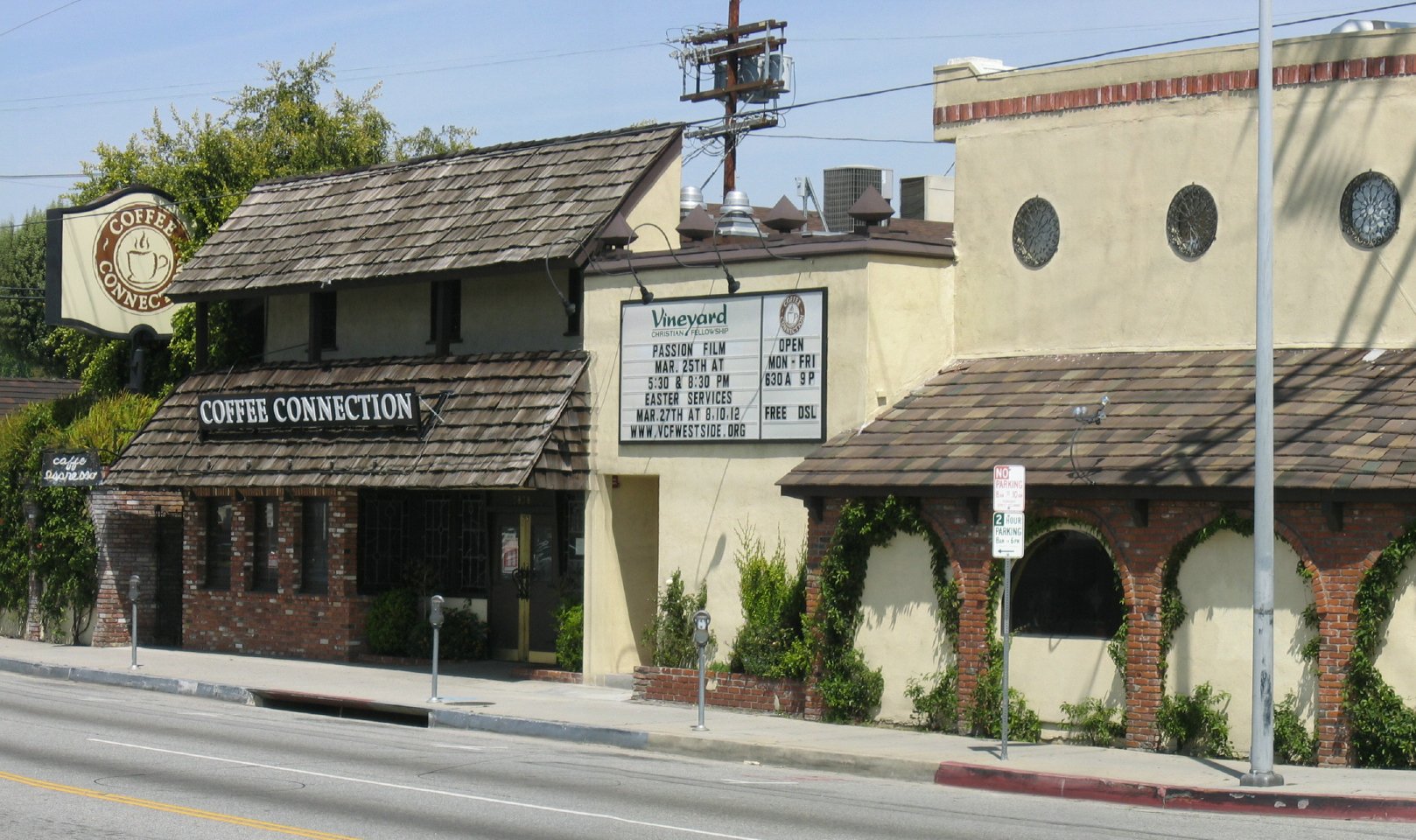
I recall when I was reflecting on the reality that the Westside of Los Angeles where I served as a pastor was only 3% churched. I realized how much of my sense of success was connected to how many of that 3% liked our church….more than how we were engaging the 97% who were unchurched.
Here’s the question that challenged me: If I had a choice between next Sunday having 100 new believing people who are choosing our church rather than another… perhaps due to another church facing a leadership crisis… and that of just 5 unchurched lives who were exploring Jesus….which would I really choose? The truth is that if next Sunday a hundred more people showed up… most of us would be elated… we would embrace it as a great sign of success… regardless of who they represented.
My own conviction and confession is that it is easy to be more committed to reaching the unchurched in rhetoric than reality.
So I want to invite us to consider the following to serve our perspective and practice; the culture that surrounds us, the nature of our gatherings, and some specific models that we can draw from.
I. Understanding the Cultural Times We Live In
Many contemporary churches…
Were birthed amidst a “boomerang”
I’m part of the Vineyard movement of churches which arose from the 1970’s Jesus movement. This wider generational movement created a profound intersection between Christ and culture. The movement arose within a generation which was defying the status quo and searching for that which could offer greater love and peace. Many were drawn to Jesus and realized Jesus was the source of what they were truly seeking. They saw him as the more true rebel and revolutionary…who “redeemed the false rebel” as he called them into a true spiritual revolution.
What followed has been described as a “boomerang”…referring to how the Baby Boomer generation which had some connection to Christian beliefs… but had often left church engagement… came back in large numbers. They were the generation which had been most loosed from tradition by way of a more pluralistic culture…but as they began families and aged…they sensed the need to rediscover moral and spiritual grounding. They naturally connected to those churches which offered cultural styles that were more relatable… those that were casual, contemporary, and often charismatic in nature. Such churches often flourished amidst this time. [1]
Many contemporary churches…
Became vulnerable to becoming “holy huddles”
From the 1970s through the mid-1990s, the culture was generally accepting of people choosing to join churches… and the planting and growing of churches seemed to be doing well. However, by the mid-1990s that begins to change…culture becomes more secular… and begins it’s transition into a more post-Christiam and radically individualistic culture. [2]
In addition, Christian culture became associated with culture wars that sought to impose themselves as the “moral majority”… and cultivated a sense of separation and superiority in relationship to the unchurched. This caused the wider culture to become more adversarial toward “Christianity” and the Church in general.
Many churches have since faced decline… and are vulnerable to becoming “holy huddles” where the “believers” can find refuge. There are still churches which are growing….and lives being baptized…but in most cities the overall engagement with the unchurched has declined.
As James Emery White describes,
“Not only do most Christians, and Christian leaders, have few non-Christian friends, they don’t even view non-Christians warmly. Subtly or not, they are seen as the enemy. It’s as if they perceive the world to be in two camps: on the one side, you have the pro-family, Christian-radio-listening, fish-sticker wearing, Tebow-loving, Bible-carrying types against the left-leaning, evolution-believing, gay-marriage-supporting, “Fifty Shades of Grey”-reading pagans. When you divide the world like that, and have an “us against them” mentality, you won’t have much happening in the realm of effective outreach. Christians will simply fall back into their holy huddles and give into condemnatory attitudes.” [3]
Many contemporary churches…
Are still rooted in unique strengths to engage today’s unchurched lives
While many churches may face the challenges of cultural separation, the unchanging reality is that every human life was created for relationship with God and many churches are rooted in qualities which can serve the relationship with unchurched lives. Many churches and church movements, such as the Vineyard, were shaped from their inception to welcome those alienated by conventional church dynamics. They do well to embrace being…
· Rooted in recognizing the radical and revolutionary nature of Jesus.
In a world that has become increasingly flooded with voices calling for change…many long for one who truly engages and embodies ultimate change. They may be slower to come and truly explore Christ, but when they do, he shines ever more distinctly.
· Rooted in the freedom to be culturally current.
While so many churches are rooted in the cultural styles of the past that have been difficult to change for the sake of their mission, those of us who were birthed in the value of being “culturally relevant” can embrace the freedom to adapt our methods to serve the mission.
· Rooted in the unpretentious qualities of simplicity and authenticity.
Unchurched people feel uncomfortable fitting into formal religious style… and movements like the Vineyard are naturally rooted in a “come as you are” dynamic. John Wimber, the father of the movement, also sowed a clear desire to avoid hype… and that is significant as our current culture has only grown more cynical about religious manipulation, performative theatrics, or emotional exploitation.
· Rooted in personal encounter rather than mere propositional truth.
Many non-religious individuals view the modern church as a collection of judgmental hypocrites who talk a lot but do very little to help the world. In recapturing our call to be "doin' the stuff," we are able to actively demonstrate God's love.
What is the point of this very simplified summary of the cultural times we live in? The point is to recognize that many churches have experienced the change in culture and become more defined by providing comfort and consolation for those who are a part of our Christian culture….rather than engage the culture we are called to. We need to view decline not as a reason to become less engaged with the unchurched, but rather to face the need to become more engaged. We need to recognize that we are called to be a light and witness to the culture around us… and that the vast majority are less familiar with Christian beliefs and practices. It is time to create church cultures that bring down barriers and build bridges with the unchurched.
II. Creating a Culture that Engages the Unchurched in our Most Public Gatherings
The term “unchurched” represents a diversity of lives, including some who have wandered from a faith they once followed…perhaps getting lost in various life transitions, disappointments, or doubt. However, the growing majority are those who simply have very limited relationship to Christian beliefs and practice. For many, engaging our gatherings will be as foreign as going to a meeting of a club for something they have very little understanding of…while everyone else seems to understand all the parts and phrases that are part of the churched subculture.
I realize that proposing that we should value engaging the unchurched in our “most public gatherings” can be controversial itself. Some may say that when the church gathers for what we call “church”… it is strictly for those who are already believers. However, there is less prescription for how people may meet than we may think. One of the primary texts that describes how the church was initially gathering says,
"Day after day, in the temple courts and from house to house, they never stopped teaching and proclaiming the good news that Jesus is the Messiah". (Acts 5:42)
This describes gathering as a public witness in the Temple Courts. The early apostles and believers boldly shared their faith in a central, public space where large crowds gathered, even in the face of threats and persecution from religious authorities like the Sanhedrin. This appears balanced with more private fellowship as they gathered intimately in homes for breaking bread, prayer, deep discipleship, and community support. The Apostle Paul similarly describes his ministry as teaching "in public and from house to house." (Acts 20:20)
While we may associate our primary weekend gatherings as “the church”…the truth is that the church is never defined by any particular form of gathering. There is a significant decision that every church needs to make about how they see the nature of Sunday gatherings. I believe that it is as fitting to choose that of the hillsides and seashores where Jesus taught publicly. We could add the entry to the villages where often we are told that the people went out to engage him. In all these settings, Jesus did much of his teaching….the teaching that we engage in our Sunday gatherings…and it often was to both the curious and the committed. He saved some further teaching to his core group of disciples…as was common to the tradition of a rabbi….but the public gatherings were diverse.
Some describe this as a “Front Door Design”…in which a church recognizes that weekend services are actually the primary front door to the unchurched. In truth, Something usually draws people to the door…. perhaps the invitation of a friend… or driving by and sensing their spiritual need…or a need they begin to explore online… but the doorway is then the weekend gathering. The question for us is, are we truly creating a space that engages those who may be skeptical or entirely new to Christian beliefs and practices?
Embracing a need for creating a culture that engages the unchurched in our most public gatherings is not easy. It involves some hard choices.
The choices that are involved…
Choose to care enough for the lost to embrace the challenge.
To create a space for the unchurched, we don’t have to be gifted as evangelist, we just need to care as Jesus did and does. It was this care that was in constant conflict with the religious leaders. The common way of seeing the world is that of defining who the good people and the bad people are. The religious leaders had a very clear version. The problem was that Jesus didn’t join their side…because he didn’t see the world that way. He saw a world in which all had “gone astray”… and came to bring home those who were responsive to God’s grace.
As we face the challenge to overcome the “us vs them” view which so many hold, we do well to remember the mission of Jesus. Jesus declared I came “to seek and save the lost.” (Luke 19:10)
Those words reflect so much. In them we connect with Christ’s defining sense of purpose and priority and passion. It was his whole purpose…his defining priority… and his deep passion…which means what he was willing to suffer for. This challenges us to consider our calling. If we are those who are leading the mission of Jesus, we need to begin by embracing our calling to “to seek and save the lost.”
Choose to cultivate genuine love for the unchurched.
I imagine that every one of us has felt the more adversarial relationship with culture. When the world seems more hostile it can seem natural to begin to relate to the common culture as our enemy….and we begin to cultivate the “us vs them” mindset. The underlying problem is that we become shaped by fear and resentment.
As one source describes,
“I believe the most overlooked key to growing a church is this: We must love unbelievers the way Jesus did. Without His passion for the lost, we will be unwilling to make the sacrifices necessary to reach them. Jesus loved lost people. He loved spending time with them. He went to their parties. From the Gospels it is obvious that Jesus enjoyed being with seekers far more than being with religious leaders. He was called the “friend of sinners.” (Luke 7:34)
Many churches are full of members who love each other but still the church is dying or at least not growing. In a small church, the fellowship can become so tight that newcomers are unable to break into it. They have a wonderful fellowship among the members but they don’t have a love for unbelievers. It is simply a myth that large churches are always cold and impersonal, and small churches are automatically warm and loving. Size has nothing to do with love or friendliness. The reason some churches remain small is because they aren’t loving. People want to go where love is. A lack of love drives people away. – Pastors.com [4]
Some of us may need to bring our fears and resentments before God…and listen as Jesus teaches us to “love our enemies.” Those of us who feel most secure among church people may need to face our insecurities around those outside the church. As we find our security in Christ, we can learn to love others as Jesus does.
Choose to value common ground.
Our current culture is deeply invested in defining us and dividing us by our differences. However, the Gospel involves meeting us in our common humanity. In contrast to the “us vs them” mindset that often runs through our current “Christian” culture, we do well to listen to the Apostle Paul…
“Even though I am a free man with no master, I have become a slave to all people to bring many to Christ. When I was with the Jews, I lived like a Jew to bring the Jews to Christ. When I was with those who follow the Jewish law, I too lived under that law. Even though I am not subject to the law, I did this so I could bring to Christ those who are under the law. When I am with the Gentiles who do not follow the Jewish law,[a] I too live apart from that law so I can bring them to Christ. But I do not ignore the law of God; I obey the law of Christ.
When I am with those who are weak, I share their weakness, for I want to bring the weak to Christ. Yes, I try to find common ground with everyone, doing everything I can to save some. I do everything to spread the Good News and share in its blessings.” - 1 Cor. 9:19-23 (NLT)
Paul says “I try to find common ground with everyone”… in order to “save some.” He is so clear that he has new freedom…but welcomes identifying with the common nature he still shares and understands. Paul recognizes that when we receive Christ what changes is Christ now at work in us… not something inherent to us.
It is this type of connecting that Tim Keller once described as the most essential quality of a missional church. He said,
“A missional church is characterized by a great deal of respect for people who don't believe. A missional church understands what it's like not to believe.
And that permeates everything, every meeting. We understand what it's like not to believe. We understand the problems people have with the church. We understand the problems people have with the way life goes.
We understand people who wonder about suffering, they wonder about hypocrisy in the church. They wonder about injustice.
So because we understand that, the way the preaching goes, the way conversations happen in small groups, non-Christians can be there, and not be offended by all the cracks about non-Christians…and secondly, they're not totally confused.
Because instead of just using evangelical subcultural jargon, we're always, in all of our conversations, everything from the education to the worship service, the preaching, were always connecting the gospel to baseline cultural narratives, problems, hopes, aspirations.
When non-Christians come in, they see that we inhabit the same world.” [5]
Choose to speak to everyone.
A large part of Christian culture has created ideas that define what a “serious” church will teach… and much of it is rooted in pride….and blinded by that pride.
With this comes the assumption that if a church is trying to speak to the “not yet believing” unchurched, they will inherently offer only a watered-down version of truth...and lack the “deeper” truth of the Scriptures. While that certainly can be true… and some forms of the “seeker sensitive” style of churches may have tended to do so, there is simply nothing that inherently requires compromising truth if speaking to both the churched and unchurched together.
When Jesus spoke… who was he challenging? Everyone. When he said we are to “Love our enemies”…I can’t help but hear something as challenging to for churched and unchurched alike. The same is true for nearly everything the Scriptures call us to.
As such, I find it helpful when teaching, to phrase commands and imperatives as that which “we need” …rather than what “you need.”
This also involves simply explaining more …just as we would to anyone we are trying to include in a conversation. It is not a matter of presuming that the unchurched should understand everything…but that there is enough explanation so that they can feel that their presence and exploration is clearly in mind.
James Emery White raises the question, “Is your message simply proclaiming the Christian message or actually explaining it?” He further unpacks the challenge saying,
“The bane of contemporary preaching is the “curse of knowledge.” That phrase is tied to research conducted at Stanford University. The idea is that once we know something, we find it hard to imagine what it’s like not to know it. We’re so used to talking to the already convinced that we have lost our intuitive sense of what it means to talk to someone who isn’t a Christ follower. When I’m preparing a message, I assume those listening have no knowledge whatsoever in terms of the Christian faith. I never use terms such as Trinity, revelation, sin or grace without explaining what they mean. Even something as elemental as how I reference a passage in the Bible is explanatory in nature. Instead of saying, “This passage is from John 1:14,” I say something along the lines of, “This is from the biography of Jesus written by John, one of four biographies in the Bible.” In other words, if you want to reach the unchurched, assume they are present and accounted for.” [6]
We do well to recognize that there are both some Biblical phrases that may be not easily translate their meaning unless we add some simple understanding. For instance, we have countless songs that speak of “’the power of the name” referring to Jesus. It can seem to imply that there is something of an almost magical power in the name “Jesus.” The truth is that Jesus was a fairly common name…not so different from “Jesús” (pronounced hay-SOOS) across Latin America…or “Joe” in northern America. It can be helpful to explain that when we speak of the power of his name, we are referring to what one has become…the way we would say that someone has “made a name for themselves”… which means… what they have achieved. With this understanding… the power of “lifting up his name” becomes theologically clear and more personally powerful.
Choose to be a culture that both invites…and includes… the unchurched.
Many churches encourage their people to invite friends and family to come to the church services… but they don’t cultivate a culture that understands how to naturally welcome them and include them. Inviting and including are two side of the process….and need to be developed together.
I recall the one Sunday that as the Lead Pastor I didn’t sit in the front row. Over the past few years I had developed a significant relationship with a young director of programs at our local park. We began to engage spiritual issues and he told me he wanted to come to the church. So since I wasn’t speaking that day, I sat with him. I could hear every strange word and experience every weird element. Sitting next to a friend who is unsettled in what they believe will change your whole experience of how we tend to communicate.
In a list of strategies for growth that cost nothing, Carey Nieuwhof includes this strategy:
“Cut the Weird. Christians can be socially weird. Too often, we use unnecessarily weird language. Here’s what’s actually at stake: if someone has to learn code to join your church, you likely won’t have many people joining your church. Our challenge is to reduce the human barriers that keep people from Jesus, not to erect new ones. And, no, being weird does not mean you’re being faithful. It just means you’re being weird.” [7]
Some may presume that charismatic practices may be perceived as inherently weird and therefore this point implies they may be in conflict with engaging the unchurched. I don’t believe that is the case at all. The unchurched can be drawn to experiencing God’s presence… there simply needs to be a value for caring about their understanding rather than our personal experience. (The Apostle Paul explicitly says we should care about this in In 1 Corinthians 14:23.) The point is to cultivate both inviting and including.
Choose the applause you value.
Recognize that you may have to choose between different applause. Much of American church culture has developed points that will be applauded. For instance, there are a host of shows on Christian radio that warn believers to “find a church that teaches the Bible”…which implies that many churches are not really committed to the Bible. What strikes me is that these voices don’t actually have to be any more faithful than others… they just need to imply they are… and it proves to shape people’s trust. Such declarations become something of an “applause line” amidst churched culture. As such, pastors can consciously, or even unconsciously, be drawn to make certain declarations that may get the applause of a part of churched culture…but create barriers or distractions for helping the unchurched navigate their process towards knowing God. So we may have to choose whose applause we value most.
III. Some Specific Means to More Proactively Engage the Unchurched
I want to share a few different ways in which different leaders have sought to engage the unchurched. The purpose of sharing different modes and models is because I believe that every church and every leader is different. Every leader has a different personality and nature. Every church has different circumstances and resources. My challenge is that each of us should look for some natural connection and potential in some of the following.
1. Serve the needs of the community.
Serving the community at large creates a culture that shows it cares for people…and connects with those invested. As God told his people in exile, “Seek the peace and prosperity of the city to which I have carried you into exile. Pray to the LORD for it, because if it prospers, you too will prosper.” (Jeremiah 29:7)
Amidst the minefields of misconceptions that often separates people from the church, the opportunity to physically serve people is a bridge that crosses over that minefield.
There are lots of ways in which a church can serve the needs around them: food distribution, after-school programs, recovery programs, English-as-a-Second-Language (ESL) classes, and more. While a church may be able to develop a program itself, they can also join an initiative that is already set up. [8]
2. Cultivate Relationship Building
There is no clearer connection to the unchurched than the countless relationships that those attending already have developed or could further develop with their own family, friends, neighbors, and co-workers. As such, there is immense value in helping churched lives grow in those relationships.
For several years we did a Fall series or message related to “The Art of Neighboring” drawing from the ideas in the book by Jay Pathak and Dave Runyon. [9]
We would spend weeks building on the “Host a Holiday Party Challenge” in which people host a holiday party early in the holiday season to get to know and serve their neighbors.
We also held a one day seminar entitled “Listening for Heaven’s Sake” which helped every grow in the skill of active listening. [10]
3. Create a context to explore beliefs (i.e. Alpha)
While I believe we all do well to better engage the unchurched in our primary gatherings, the ideal context for engaging the unchurched is in a space that is set apart for their exploration. That is the essence of what the Alpha Course is all about. It’s about creating a space that is designed for those who don’t yet believe to explore…not as outsiders…but in a space that is designed for exploring larger life questions and the Christian faith.
Recently Jay Pathak, the National Director of the Vineyard USA, talked about Alpha with Ger Jones, whose church is among the most dynamically centered and growing through the Alpha Course.
Watch; We Are Vineyard - Building a Church for People Who Don’t Go to Church with Ger Jones (Part 2) - https://www.youtube.com/watch?v=yafEfWH6ot0
As hundreds of thousands of churches have launched Alpha Courses, what has become clearer is succeeds best when it is done with two elements…
· Centrality – something that is more defining of a church’s life than a mere appendage or “add on.”
· Consistency – something that runs at least twice a year for 2 years.
A few other things that are so encouraging about Alpha. First, as Jay so valuably points to… it can work with any size group. It can be scaled to work. Secondly, there is no lack of easily assessable training. They have created online video training for every aspect. And thirdly, I would add that they are continually updating every aspect of the course…which maintains the most culturally relevant quality.
My wife and I have attended Vintage Church in Santa Monica….and I can tell you that when Alpha becomes a part of a church’s culture… the whole culture grows in inviting and including the unchurched..
4. Contrast and contend with the cultural narratives (i.e. Tim Keller)
Some refer to this as the "Mars Hill Contextualization”…because as the Biblical Book of Acts describes how the church expanded through cultures, we can see a very significant difference between how Peter spoke out in Jerusalem…and how Paul spoke up at Mars Hill in Athens, Greece.
As James Emery White says…
We’re used to taking an Acts 2 approach, which is Peter in front of the God-fearing Jews in Jerusalem, and all their background knowledge. We need to move toward an Acts 17 approach, which is Paul on Mars Hill, where he had to start with them knowing nothing.
Paul brilliantly from their own cultural narratives and presents how the news of Christ actually fulfills what they have been looking for.
Contrasting and contending with the cultural narratives is what the late Tim Keller was a master of. He taught across the whole of the Scriptures….and in almost every text…he would recognize that there is a truth in the Scriptures that prevails over the narratives of the culture. A great example can be found regarding Gospel Identity at https://www.facebook.com/watch/?mibextid=wwXIfr&v=260494586648560
While very few can contend with cultural narratives as naturally as Tim Keller did…but we can all look for opportunities. When we take the time to ask ourselves, how can I help this truth be heard as both true and good, we help the mind and heart of both the churched and unchurched.
5. Engage the difficult “hot button” topics (i.e. science, sexuality, etc.)
James Emery White is the founding and senior pastor of Mecklenburg Community Church (also known as "Meck") in Charlotte, North Carolina. He planted the church in 1992 and there are now over 20,000 active attenders. The most impressive element is that more than 70% of its growth has continued to come from those from unchurched backgrounds…and has remained true for over 32 years of yearly growth.
One of the choices he makes that has impressed me…is interspersing short series that engage some of the hard and hot-button topics that many would tend to avoid…such as science, sexuality, masculinity, identity, mental health, doubt, racism & justice, and even how to navigate disappointment in church leaders. [12]
It’s important to recognize that he is choosing to actually engage such issues in a more full and fair manner… rather than simply to dismiss or demean them. It proves far wiser to address such topics with more extended focus rather than in off-handed comments. For instance, if you take a cheap shot at some controversial element in science news….you likely will lose some trust with those in the medical or tech community. But if you did a message that affirmed the role of science…while also affirming the limitations of human perspective...you may be surprised how much appreciation may be built.
While I know that some of these topics can be intimidating… the truth is that we don’t have to be an expert on every topic…or any topic. When it would simply be presumptuous to claim enough understanding, we can draw on gifted voices who are.
6. Develop a greater digital engagement
Through the pandemic… nearly every church had to learn how to engage today’s digital space. I know a lot of pastor’s were glad when that need was over. But others have understood that it is far from over. The digital world is a larger part of how we connect.
James Emery White has been the strongest advocate of what he refers to as the “Hybrid” church…one which has both a physical and digital space. He challenges us to recognize that if we want to meet people where they are at… younger lives in particular…are online. They are likely to explore something online first. He has shown how there is a far greater potential than simply having a website or even posting videos of sermons. There are ways to further create a digital space where people can seek personal prayer and group participation.
Some of us may recognize that we have an opportunity to strengthen our digital front doors.
In closing, let me share…
Three things I hope we will take to heart.
1. Engaging the unchurched will not be served by guilt…but rather compassion.
Jesus did not enter this world with guilt… nor with a need to earn the Father’s love. He was loved (Matthew 3:17)…and his desire was to see others enter into the joy of that love. (John 15:11)
What was it that moved inside him? We are told how, “When he saw the crowds, he had compassion on them because they were confused and helpless, like sheep without a shepherd.” (Matthew 9:36, NLT) Religious guilt simply elicits empty obligation. Compassions flows freely out of desire. Rather than simply feeling guilty that we don’t care enough about the unchurched… we should focus on connecting with the care that we do have…and then taking it where it leads.
2. Engaging the unchurched doesn’t need us to put on something we aren’t… but rather to create space to genuinely relate.
When most of us think of the need to better reach the unchurched, we feel the impossible need to become something we aren’t. We feel like we were told to go become a pro-basketball player or an Olympic gymnast. But the truth is that Jesus changed the world by gathering a group of followers that were clearly diverse in their strengths and personalities….and he knew that the same purpose could flow through each of them. It wasn’t a process marked by conformity or comparison…. but a shared willingness to embrace his purpose and presence at work through them.
The purpose of providing diverse ways of engaging the unchurched has been to allow each of us to identify what we can most naturally connect with…which leads to the last point in closing… which is…
3. Engaging the unchurched needs us to do something.
The most valuable decision we can make is to recognize at least one thing we can do…and then do it… put it into practice.
Discussion Questions for Pastors & Teams
1. Every church community develops a culture shaped in part by it’s past, it’s current dominant group of attenders, and it’s most influential lives. How do you see each of these influencing how the church engages the current unchurched culture?
2. Sit through an entire weekend gathering as if a skeptical unchurched friend or family member was sitting with you. As you imagine what they may be trying to understand, how would you experience each part of the gathering?
3. Discuss and develop a list of common phrases or practices expressed in weekend gatherings, that might be difficult for someone outside any Christian background to understand. After completing that list, consider how each could be expressed or explained in a way that would offer more understanding.
4. Discuss and develop a list of common issues that are currently raised against belief in God or the Christian faith in particular. After completing that list, consider how these could be addressed in a way that could serve the unchurched either directly or by helping the churched engage them in their own relationships.
5. Many churches encourage their people to invite friends and family to come to the church services… but they don’t cultivate a culture that understands how to naturally welcome them and include them. Recognizing that inviting and including are two related aspects of creating a culture that engages the unchurched, what might be steps you could take to develop these together?
6. Six different modes or models that can serve a church’s engagement with the unchurched were described.
1. Serve the needs of the community.
2. Cultivate Relationship Building
3. Create a context to explore beliefs (i.e. Alpha)
4. Contrast and contend with the cultural narratives (i.e. Tim Keller)
5. Engage the difficult “hot button” topics (i.e. science, sexuality, etc.)
6. Develop a greater digital engagement
Which one or two of these do most naturally connect with? Which one or two of these do you most naturally imagine your church connecting with?
7. After identifying one or two that you or your team share as the most natural to develop, make a list of the steps that will be needed to develop this element, what challenges you will have to overcome, and how will incorporate some means to maintain the process.
Notes:
1. For a couple different views on the era of the boomer generation returning to church, one can view: Baby Boomerangs Kerby Anderson, May 27, 1994 (Probe) - https://probe.org/baby-boomerangs/
And Baby Boomers Are Returning to Church by Thom S. Rainer - https://churchanswers.com/blog/baby-boomers-returning-church/
2. Evangelical church attendance and self-identification in the U.S. peaked around 1993 (reaching roughly 30% of Americans) and began a steady, measurable decline starting in the late 1990s through the 2000s. (Noted in: What Happened To US Churches The Past 50 Years? By Richard Ostling, January 13, 2026 - https://religionunplugged.com/news/what-happened-to-us-churches-the-past-50-years)
Tim Keller wrote a valuable statement about “The Missional Church” in relationship to the changing culture. In it he states:
“One of the reasons much of the American evangelical church has not experienced the same precipitous decline as the Protestant churches of Europe and Canada is because in the U.S. there is still a 'heartland' with the remnants of the old 'Christendom' society. There the informal public culture (though not the formal public institutions) still stigmatizes non-Christian beliefs and behavior. "There is a fundamental schism in American cultural, political, and economic life. There's the quicker-growing, economically vibrant...morally relativist, urban-oriented, culturally adventuresome, sexually polymorphous, and ethnically diverse nation...and there's the small town, nuclear-family, religiously-oriented, white-centric other America, [with]...its diminishing cultural and economic force....[T]wo nations..." Michael Wolff, (New York, Feb 26 2001, p. 19.) In conservative regions, it is still possible to see people profess faith and the church grow without becoming 'missional.' Most traditional evangelical churches still can only win people to Christ who are temperamentally traditional and conservative. But, as Wolff notes, this is a 'shrinking market.' And eventually evangelical churches ensconced in the declining, remaining enclaves of "Christendom" will have to learn how to become 'missional'. If it does not do that it will decline or die.” – Tim Keller - https://gospelinlife.com/manual-paper/the-missional-church/
3. Pastor: Christians should drop 'us vs. them' mentality - Jonathan Merritt, May 12, 2014 - https://religionnews.com/2014/05/12/james-emery-white-captivate-unchurched/
4. From Pastors.com (https://www.pastors.com/free-resources/the-most-overlooked-key-to-a-growing-church)
5. More complete message by Keller on Gospel Identity - https://gospelinlife.com/sermon/gospel-identity-2/?utm_id=97758_v0_s00_e0_tv1_a1demo0ecmc6ui&fbclid=IwY2xjawVN0btleHRuA2FlbQIxMABwZG9mBWJyaWQRMXFkamd2enZnRWlrbFFaTENzcnRjBmFwcF9pZBAyMjIwMzkxNzg4MjAwODkyAAEeVOB2Ydo_frl6LyGJUaxnV8JFuG9_n_KmXWMXrisSTwTf-feziYTmqdovizM_aem_VSMj5jFS8aDhceCde465hg
6. The Reality of Reaching the Unchurched By James Emery White - https://outreachmagazine.com/features/80713-the-reality-of-reaching-the-unchurched.html
7. 14 Growth Strategies for Churches That Cost Nothing by Carey Nieuwhof- https://umf.org/church-leadership/14-growth-strategies-for-churches-that-cost-nothing
8. Is Your Church a Good Neighbor -Eric Swanson - https://www.christianitytoday.com/pastors/content/is-your-church-good-neighbor/
9. The Art of Neighboring - Book at Amazon – https://www.amazon.com/dp/B00A188BGQ?lv=shuf&language=zh_TW&channelId=500&plpRedirect=mhFallback
Related short videos on Right Now Media - https://app.rightnowmedia.org/en/content/details/392825
Some examples of sermon series developed related to this topic and book.
The Austin Sone church - https://austinstone.org/sermon-series/the-art-of-neighboring
Saddleback Church - https://www.youtube.com/playlist?list=PLgmRz0Ecn4AKwYqPkFSvATpcHnseP-CIi
Restoration Church - https://www.restoration.church/sermon-series-the-art-of-neighboring
Vineyard Church KC West - https://www.youtube.com/playlist?list=PLP2r2SDw-P9w
Westside Vineyard – notes on Sermon Central - https://sermoncentral.com/sermons/the-power-of-hospitality-brad-bailey-sermon-on-hospitality-184194
10. The “Listening for Heaven's Sake” seminar is available both in 10 hour classic version and in shorter 6.5 hour form Equipping Ministries at https://www.equippingministries.org/store
11. James Emery White: Christianity for Non-Christians by Jessica Hanewinckel https://outreachmagazine.com/interviews/50327-christianity-for-non-christians-james-white.html
Similarly, White expounds on this and notes: “Too many churches are operating as if they are speaking to the God-fearing Jews of Jerusalem (Acts 2) instead of to the agnostics on Mars Hill (Acts 17). ] An Acts 2 approach in an Acts 17 world is doomed to fail.” - Pastor: Christians should drop 'us vs. them' mentality - https://religionnews.com/2014/05/12/james-emery-white-captivate-unchurched/
12. Some specific series titles: The Anxious Generation, Doubt, Gender, The Bloody Bible, God and Science, So What’s the Difference, The Deconstruction Zone, #MeToo, Spiritual Malpractice, Fifty Shades). To view examples of series or get full notes, you can go to https://www.churchandculture.org/messages